Home

Mad Dash

Leave a comment

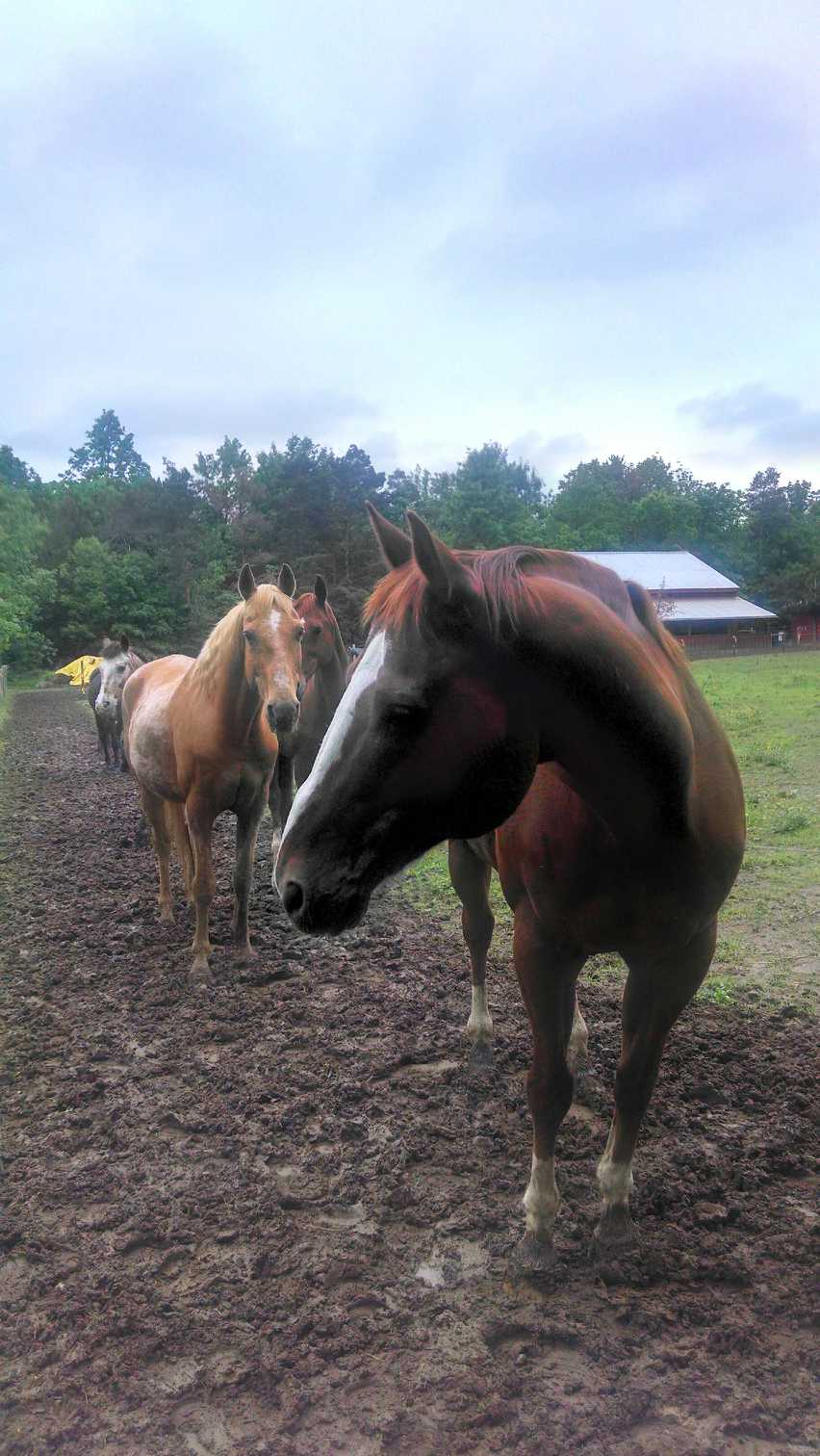
While slowly getting acclimated to eating lush grass the horses in the beginning are only allowed out on the pastures for a few hours per day.  This prevents them from getting laminitis and foundering.  So as you can imagine they are very excited to get out to the grass.

First they line up and patiently wait for the gate to be opened.

V__6B89

Sunbun line leader

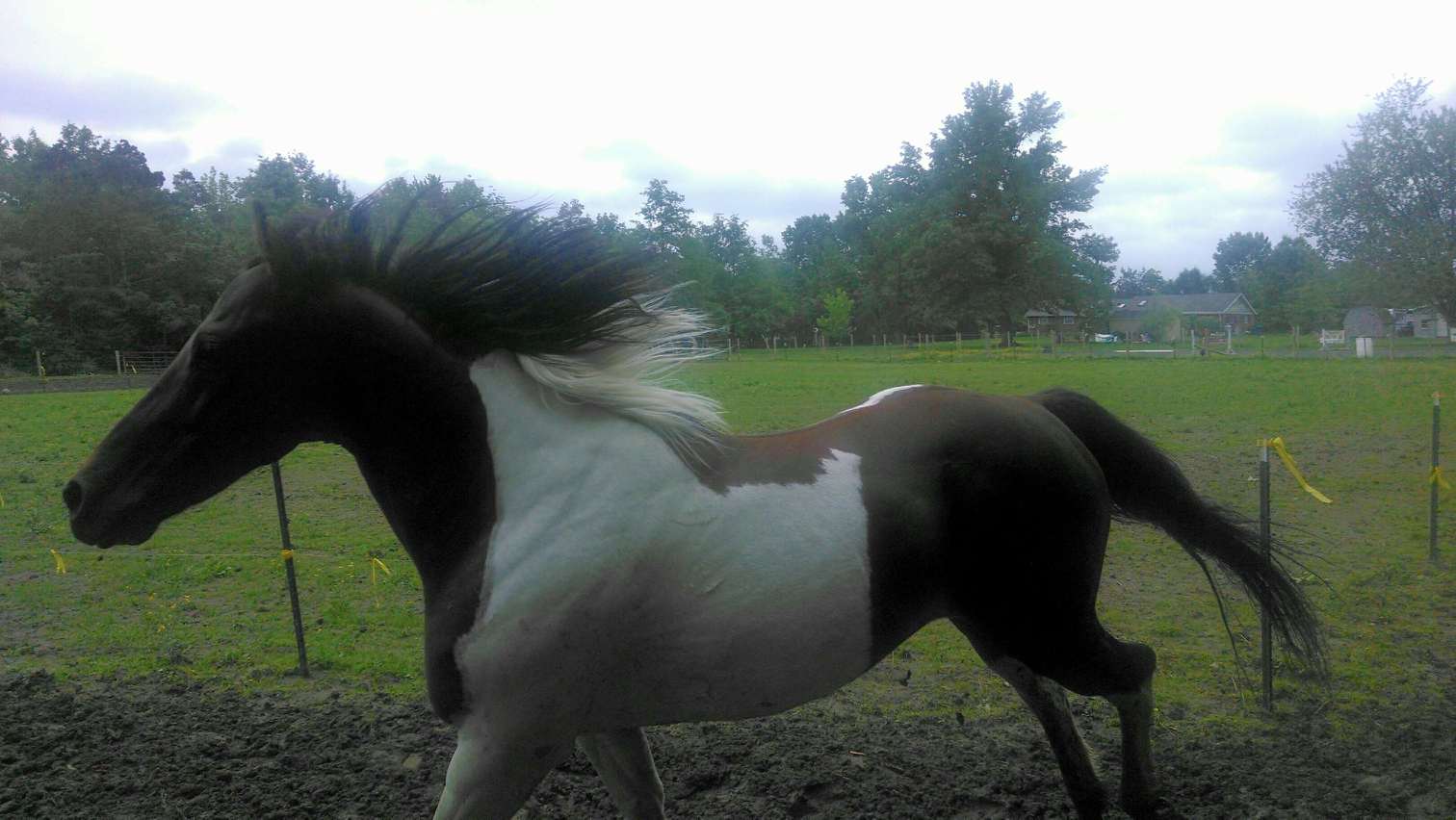
Then the mad dash to the back pasture

V__19AF

One at a time no pushing

V__B4BA

Run like the wind Chex

V__A1C0

Come on Nash and Casey.

Then after a little bit of running around and tearing up the pasture…

WP_20140520_13_44_41_ProWP_20140520_13_44_13_Pro

… they calm down and start grazing

WP_20140520_13_46_00_Pro

WP_20140522_10_51_28_Pro


He thinks my tractor’s sexy

Leave a comment

Yes – from Kenny Chesney’s song:

So I am becoming a little more proficient and confident in using the tractor.  I can load up the farm truck with manure with out denting anything.  I can cut the pastures but find it so boring going around in circles.  It is nice to be able to hang out with the BF while doing it.

But really I would rather be here:

WP_20140514_002

Isn’t that right, Baby? (aka Oreo)

WP_20140514_14_03_35_Pro

Foto Friday

1 Comment

The Path Less Traveled

Path

Get up. Stand up.

Leave a comment

This post started at standing up in the saddle but then I found this great article on heals down (← click to go there).  A good read for my students that consistently hear from me “get your heels down”.

The article says this about the exercise I have my students do: “Stand Up – (stretch calves, find balance) stand in stirrup straight up, holding mane or grab strap, letting weight sink into heels, knees bent slightly to absorb shock, seat above heels not leaning over pommel, at the walk and trot”

Not an easy task to perform.  Now let me know from the pictures by number which ones have it right?

#1 2013-08-03_09-39-50_416#2WP_20140510_10_27_55_Pro

#3 WP_20140510_10_28_12_Pro

#4WP_20140510_10_30_07_Pro

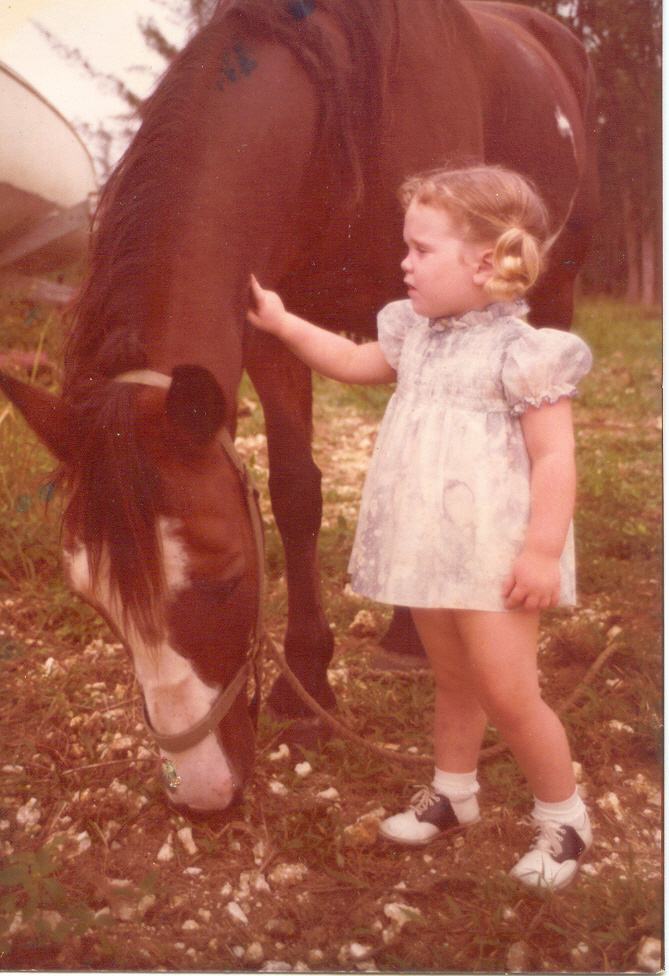
Childhood horses

Leave a comment

Another Throwback Thursday post

This is me with Gringo on the left and Koky on the right.  Koky was a Shetland pony.  It is probably these two horses that started my horse love, passion and dream to run my own horse farm.

They were my parents horses and they lived in front of the house.  We were living in a trailer at the time while my dad was building our house.

Jen2Horses

My mom’s favorite childhood story about me to tell visitors is when, on my own and without her knowing, I walked out of the trailer to visit with the horses.  I may my way across the yard and crawled under the electric fence, being very careful not to touch it.  I then sat between the two of them and had a conversation.  My mom saw me from the window then quietly and slowly walked up to the fence.  She wanted to run but knew she might startle the horses.  Then she had to coax me to come out of the pasture back to safety.

JenHorse


Changing thousands of years of thinking

Leave a comment

I have spent much of the morning reading about the natural horsemanship and paddock paradise.  There are many interesting articles out there trying to change the thinking on the way horses have been domestically kept for over a thousand years.

http://www.aanhcp.net/blogs/main/12203217-perception-vs-reality-equine-myths-and-mistakes

“But sometime around 700 A.D., with the rapid development of kingdoms and castles– complete with cavalries and armies to secure or defend various geographic areas, horses had increasingly been removed from their free-roaming lifestyle and were moved into small spaces for reasons such as an easier prevention of theft and keep the horses close by in a location convenient to the desire to be able to tack them up at a moment’s notice. Of course,what was happening was the creation of the notion that it was acceptable to keep these 1,000 pound animals warehoused or ‘in storage’ so that they were easily accessible.” ~Jill Willis

So I grew up thinking grass is good for horses.  In South Florida the grass that grows does not provide enough nutrients to sustain a horse so hay is fed all year round.  In Pennsylvania the grass is lush enough to provide the sustenance they need and hay is not necessary during the summer.  I have take equine management courses where they are telling me to grow my lush green pastures and let the horses out on them.  One thing to note is a good reason for pasture management is to ensure the land is absorbing the rain water and not causing erosion on the areas where the horses have destroyed the grass by over grazing and treading on the land.

Now I am learning that too much lush green grass is bad.

http://www.equinewellnessmagazine.com/the-dangers-of-lush-green-pasture-the-romantic-myth-that-harms-horses/

“These rich grasses are not safe because they are too high in sugars/ carbohydrates.  There is a delicate balance of microbial life in a horse’s gut, and these innate, good bacteria have their own biological requirements. If not fed properly, through a reasonably natural diet, then they are subject to being dominated by harmful bacteria that do not live in symbiosis with the equine.  

The rich sugars feed these detrimental bacteria and facilitate their dominion.  Through a complex series of metabolic events, these bad bacteria release waste by-products also known as endotoxins.  These poisons travel the equine cardiovascular system, and once meeting the hoof, they initiate an enzymatic reaction that deteriorates the attachment mechanism that holds the hoof to the horse. This is commonly known as laminitis, and is the second most prolific killer of domestic horses today. ” ~Narayan Khalsa

I still have more processing to do and am not ready for full transformation to the Paddock Paradise system as it does leave me some questions.

  • How do I ensure all the horses have coverage and protection from the weather?  In the farm’s current set up only the heard leaders are allowed under the shed roof during the rain.  While the others get wet.  I know that the water will not kill them but I have seen them shivering coming in from the wet and cold.  I have also had a horse get constantly rained on in Miami that he got rain rot.  If I build shelters in various areas of the track system will the herd separate to go shelters down the track if the herd bosses have the closest one?
  • Will this concept be accepted by my boarders?  I don’t just have to decide in my mind but also see if the boarder are interested.  I guess that we can still move ahead with the concept but keep the boarders in the traditional system if they want.
  • My older horses are on pellet grains.  Will they get the nutrients they need on hay, oats and minerals?  I thought this was interesting since 3 horses on the farm are on beet pulp and the senior feed has beet pulp in it: “Throw any and all beet pulp or feed with beet pulp in the top 15 ingredients into the garbage or compost heap. Whether organic or GMO, many unshod horses are ‘foot sore’ or ‘sensitive’ on hard ground or gravel until the beet pulp is removed from the diet. This is one of the biggest waste products that you can put into a horse (with rice bran, soy, corn and various grain by-products running closely behind. They serve no healthy purpose for the horse.” ~Jill Willis

There is no way to know who is right but for now I can say that the horses at GSF are healthy, happy and sound.  So we must be doing something right.

The horses of GSF

Leave a comment

A photo texted to me this week by one of my lesson student’s mom. The horses as set up on their dinner table are on order of their stalls on the farm. Cuervo, Apple Jacks, Nash, Casey: on the right and have the stalls on right hand side of the barn.
Heather & George in the back. They have their own two stall barn and pasture behind the main barn.
Chex, Warlock, Sunbun, Izzy. On the left side of the barn and in order back to front.
I am so impressed she remembered all their colors and stall locations.
I think she may be one of the horse crazy ones, like I was as a kid.

Pictures from Lessons

Leave a comment


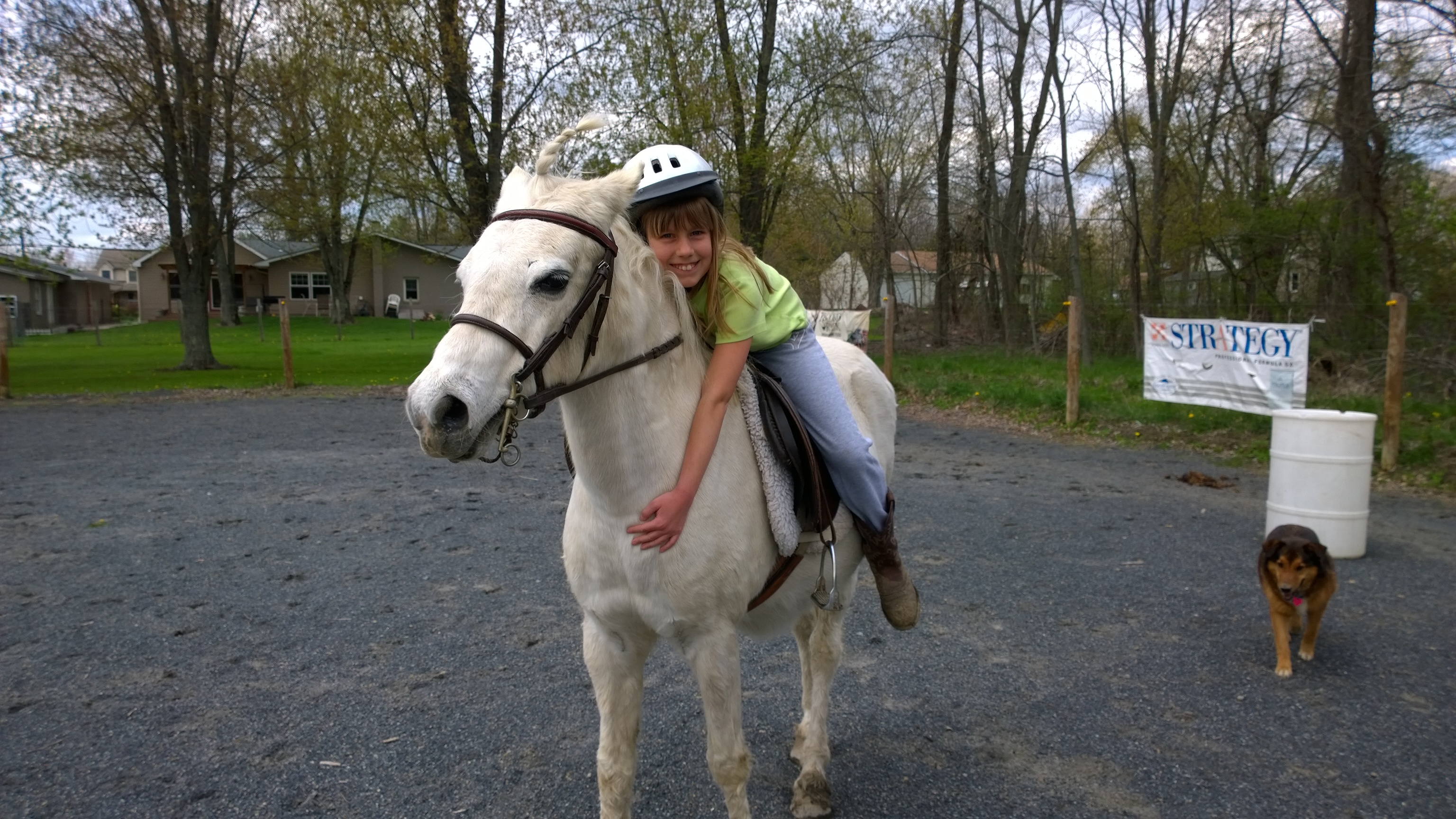
How to give a horse a hug while riding.  Lean forward and put both hands around the neck.  Oh wait the shift in your weight forward makes the horse think it is time to move forward.  Ok this time pull back on the reins with one hand and hug with the other. NOW smile for the camera. Perfect!  Great Job.  {Have a look at Heather’s forelock.  She is a Unicorn!}
WP_20140503_12_26_16_Pro

Cuervo is looking good.  Keep on trotting old man!WP_20140426_15_56_06_Pro

Escape Artists

1 Comment


 A horse farm owner’s worst nightMARE.

So I am not sure who is the culprit. It is a toss up between Apple and Chex but someone figured out how to open the back doors.  These are the back doors to my guys’ stalls (Cuervo, Apple, Nash & Casey).  The doors are closed and locked when the horses or out in the ACA during the day.  The horses can hang out in the shed row to get out of the sun and I guess someone has taken to playing with the locks.

WP_20140420_11_30_43_Pro

These are the front doors to their stalls.  they can be either open or closed during the day while the horses are out. BUT if they are open and then the back door is opened then we have horse out in the barn area which is fine…

WP_20140420_11_31_12_Pro

EXCEPT for this part which backs to the woods is not fenced.  The donkeys have wandered into the woods and I think that on the day of the great escape they led Cuervo and Izzy into the woods.  I noticed the other day when I had them out that Cuervo and Izzy got very upset when the donkeys went off with out them.  Funny how attached to each other they get.
WP_20140420_11_31_46_Pro

So now we have clips on all the back doors so the nimble mouths can’t open the locks anymore.


Sharing a video and an article

Leave a comment

Dismount video

I teach my lesson kids the emergency dismount. On little Heather we say it is easier to jump off than fall off.

Better equine communication article

If we stop focusing on performing specific techniques and start developing our intuition and feel we can gain really wonderful results. “

“To do this you have to ride from the heart.  You need to stay grounded and present with the intention of riding compassionately in partnership with the horse.  If you allow yourself to just breathe and sense the horse’s movements you can interact with the horse with timing and feel. “

Horses don’t understand this type of “sometimes” behavior.  They prefer “always” and “never”.  If you create a boundary and consistently and kindly reinforce that boundary then the horse knows what you expect.”

http://www.soulfulyou.com/communicate-cearly-with-your-horse-ride-from-the-heart/

Older Entries Newer Entries